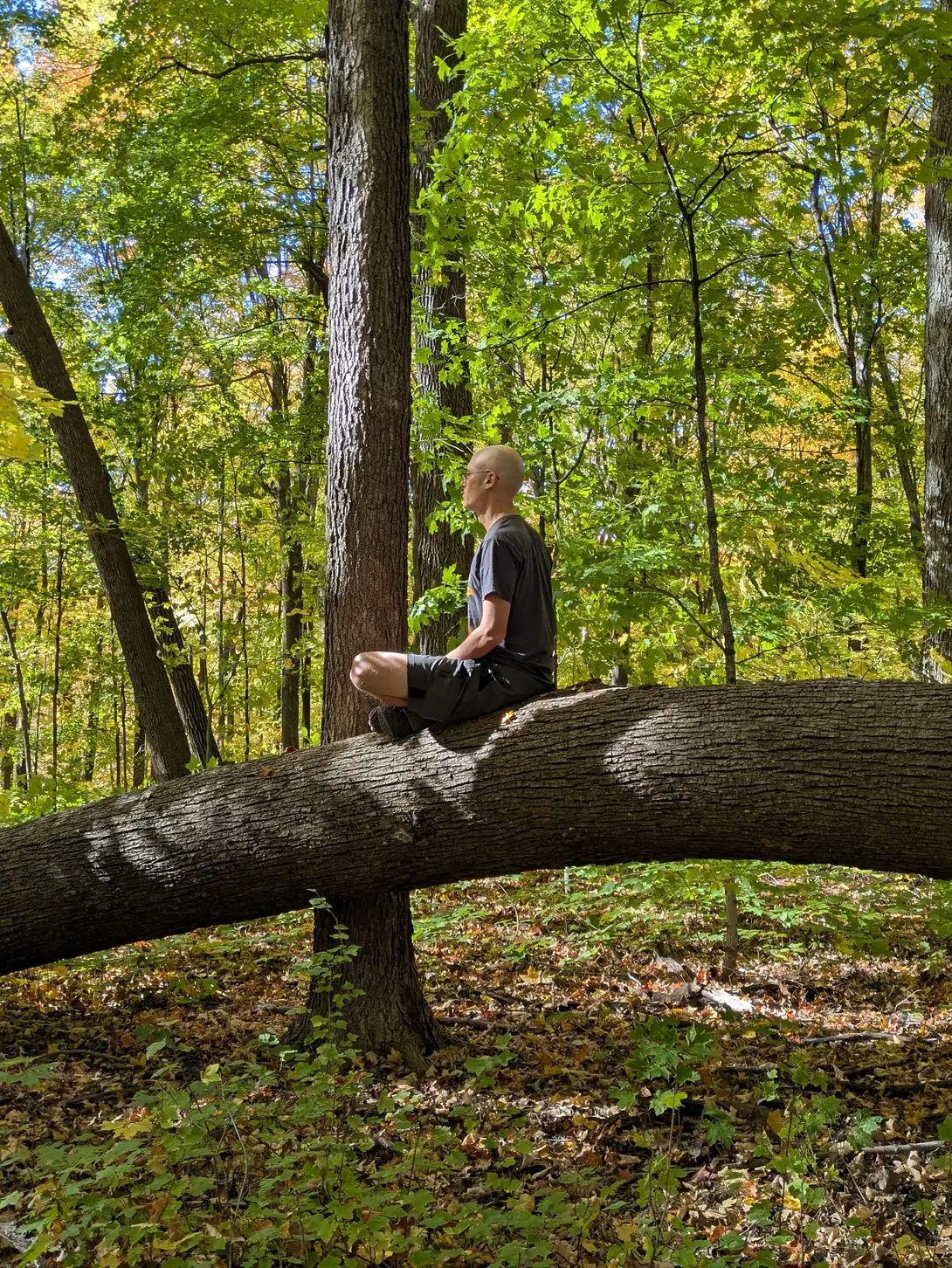
For many years, I’ve led meditation groups in various settings. People come for a while, then stop coming.
For instance, earlier this year, a colleague and I started a daily meditation group called the “Daily Reset.” I personally found it to be a nice break in the workday. Some people joined initially, and then over time, fewer did.
I get it. Taking time out of a busy day or week to “do nothing” is a big ask for many people.
I’ve tried other formats, too:
- In 2022, I led a 30-day meditation challenge in partnership with Healthy Minds Innovations at the University of Wisconsin-Madison.
- I’ve offered one-time Introduction to Mindfulness Meditation workshops to help people establish a home practice.
- I’ve led weekly meditation groups online and in person at Spirit of the Lake, One Love Yoga, Lake Fellowship, in a prison, and elsewhere.
In each instance, people told me about the ways it benefited them. The prison group had some of the most committed participants. Some returned year after year and told me about positive changes in their lives.
Each of these groups took planning, promotion, and time.
Over the past few months, my colleague and I switched from a “Daily Reset” to a “Weekly Reset,” and it has been simple to organize. I guide a few minutes of meditation, and then people can stay for as long as they like. The format is easy enough to keep doing, and the benefits have been greater than I expected.
As is typical, attendance has gone up and down. For the past few weeks, there have been just a few of us joining. That could be a reason to stop. And yet, the number of people in the meeting didn’t determine whether or not that time was worthwhile.
I was encouraged to read a recent article about research comparing short and long meditation sessions. In one study, people who meditated for five minutes experienced greater improvements in stress and mindful awareness than those who meditated for 20 minutes. Other studies found that longer sessions weren’t necessarily more beneficial. Of course, there’s more to meditation than reducing stress, but I appreciate the reminder that a few minutes of practice can be worthwhile.
The Sanskrit word abhyāsa is often translated as “steady practice.” Steadiness isn’t necessarily about maintaining an unbroken streak, like you might establish on Duolingo or some game on your phone. It’s about returning to practice, again and again. A practice can be brief. It can take on different forms, depending on your needs. You can come back to it without making it impressive.
Starting tomorrow, Wednesday, October 14, we’re opening the Weekly Reset beyond our workplace to anyone who’d like to join. We meet Wednesdays from 9:30 to 10 a.m. Central on Zoom. I’ll guide three to five minutes of meditation, then leave the space open for anyone who’d like to continue meditating, practice yoga, or do whatever feels useful. We keep our microphones muted, and cameras are optional. You can leave whenever you’re ready. No experience or RSVP needed.
Comments