If we can’t be happy now, then when?
Waiting for life to calm down sounds tempting. After the conflict ends. After the health scare passes. After the news improves. That day isn’t coming. Or if it does, it won’t stick around for long.
At the beginning of the year, my mom spent weeks in the hospital, followed by transitional care. At the same time, ICE occupied our great state of Minnesota. The world didn’t cooperate with my preferences. I felt conflicted heading off to Kripalu for 15 days to assist with yoga teacher training.
But I didn’t wait for conditions to improve. I practiced cultivating happiness anyway. And now, with my mom home and recovering, ICE moving on, and spring-like weather in February, I feel grateful. Not because the world finally cooperated, but because practice didn’t depend on conditions.
A Common Misunderstanding
People often misunderstand the Buddha’s first noble truth as “life equals suffering.” That’s close, but it’s incomplete.
While we’re alive, none of us can avoid sickness, aging, or death. An awesome job, a fantastic wife, two high-performing kids, a solid house, cars, and a retirement plan don’t guarantee happiness. I’ve had these supports for a long time, but before I found a deeper practice, I still had lots of anxious days.
We can’t count on the outside world for joy. We create peace from the inside by training the mind to stop waiting for life to be “just right.”
The Buddha didn’t teach passive acceptance. He taught an active path: develop what’s skillful, abandon what’s not. Peace doesn’t require that we fix the world first. Peace comes when we meet the world with clear seeing, and when we choose not to add more harm through our thoughts, speech, and actions.
Where Attention Goes
The work starts with choosing where we put our attention. Focus leads to growth, so when the mind stares at outrage all day, outrage gains strength. I don’t recommend ignoring harm or pretending everything is hunky dory. I think we can train ourselves to look without burning the heart.
Attention alone isn’t enough, though. How we relate to what we see matters just as much. We can train the mind to abandon unskillful qualities and develop skillful ones. We can learn what’s worth holding onto and what needs to be let go. Incline the mind toward generosity when selfishness arises. Cling to patience when anger flares up. Hold firmly to your meditation object when the mind wanders off.
This takes effort. Each of us is responsible for our own heart. Protecting the heart allows us to stay present, kind, and useful. That protection includes restraint. Not saying everything we think. Not acting on every surge of anger.
Sometimes anger seems justified. But anger tightens the body, shortens patience, and leaks into conversations with people we love. Over time, it drains more than it helps.
Goodwill (metta) offers another option. It’s something you can choose, practice, and strengthen. It keeps the heart open while action continues. It supports clarity instead of collapse.
Putting This Into Daily Life
You can start small. Notice the habit of waiting. “Once this passes, then I’ll relax.” Catch that thought. Pause. Choose differently. Take a breath. Feel the body sitting or standing right here, right now.
Set a few simple boundaries to protect the mind. No news before bed. No scrolling first thing in the morning. Check once, then step away. Act with generosity. Choices like these can help us meet reality without frying the nervous system.
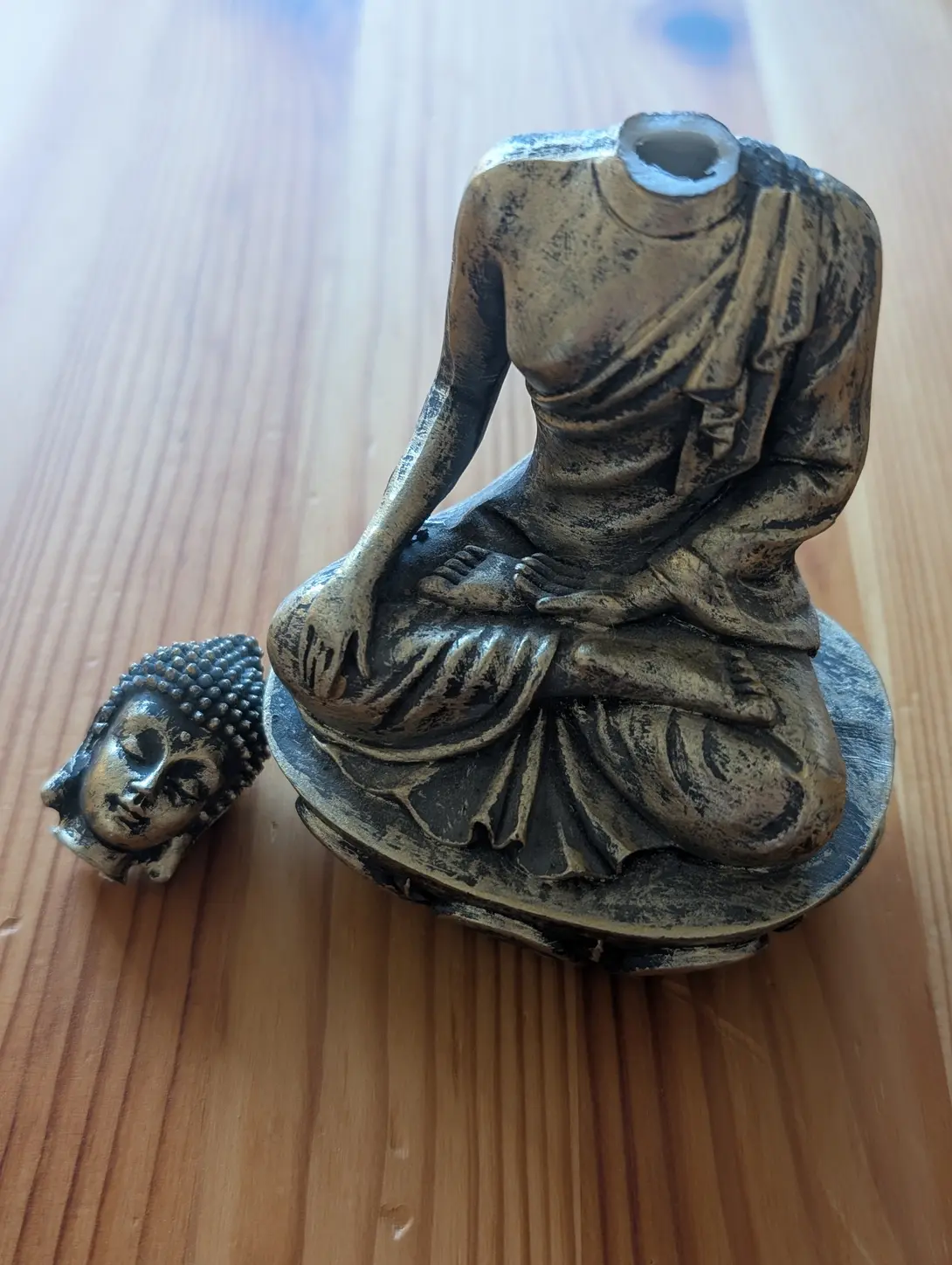
You don’t need a perfect practice. Some days go sideways. Your attention will wander off. Sometimes you snap the head off a Buddha statue by accident. Oooops. So you pick it up. Smile if possible. Glue things back together. Keep going.
Don’t wait for perfect conditions. Work to create the conditions for happiness right here, in this moment, in the middle of the mess.
Comments